Microsoft Secure Boot Certificate Update
Secure Boot has quietly played a critical role in protecting Windows devices for years. With changes coming in June 2026, it is now a security consideration businesses can no longer afford to overlook.
Microsoft has recently updated Microsoft Defender with a Secure Boot certificate readiness assessment, helping organisations understand whether their devices are prepared for upcoming Secure Boot changes. While the update is technical in nature, its impact is straightforward. Devices that fall behind risk losing key early‑boot security protections.
For SMEs and medium‑sized enterprises, this matters more than it may first appear. Secure Boot is part of the foundation that modern endpoint security relies on, and without visibility and oversight, gaps can develop long before they are noticed.
What is Secure Boot and Why it Matters
Secure Boot is a core Windows security feature that validates the integrity of a device during start-up. Its role is to ensure that only trusted and approved components are allowed to run before Windows fully loads. This early stage of start-up is critical.
Threats that operate at boot level:
- Run before antivirus and endpoint detection tools are active
- Are harder to detect once the system is live
- Can maintain persistence even after remediation steps
Secure Boot creates the foundation of trust that every other security control depends on. If that foundation weakens, higher‑level protections become easier to bypass.
What is Changing in 2026?
Many Windows devices in business environments still rely on Secure Boot certificates issued in 2011. Microsoft has confirmed that these certificates will begin expiring in June 2026.
When this happens:
- Devices will continue to start as normal
- New early‑boot security protections may no longer apply
- Microsoft will be unable to enforce certain protections at the earliest stage of start-up
Over time, this places devices into a weakened security posture without obvious warning signs. For organisations with mixed hardware estates or long device refresh cycles, this risk can quietly grow.
Microsoft Defender’s Secure Boot Assessment
To support this transition, Microsoft Defender now includes a Secure Boot certificate readiness assessment.
This allows organisations to:
- Identify devices still relying on older Secure Boot certificates
- Confirm which systems are already compliant
- Flag devices where Secure Boot is disabled or unsupported
By surfacing this information centrally, Secure Boot is no longer just a firmware‑level concern. It becomes part of your wider security posture and risk management approach.
Why This Matters for SMEs and Medium‑Sized Enterprises
This change does not only affect large enterprises. Many SMEs and mid‑market organisations face increased exposure because:
- Devices are refreshed at different times
- Firmware updates are rarely reviewed
- Security tooling focuses on the operating system and above
- Boot‑level protections are assumed to be functioning correctly
Attackers actively exploit these assumptions. Threats that operate below the operating system are designed to bypass traditional endpoint controls, making them particularly effective in environments with limited visibility into foundational security layers.
Secure Boot is a Security Foundation, Not a Setting
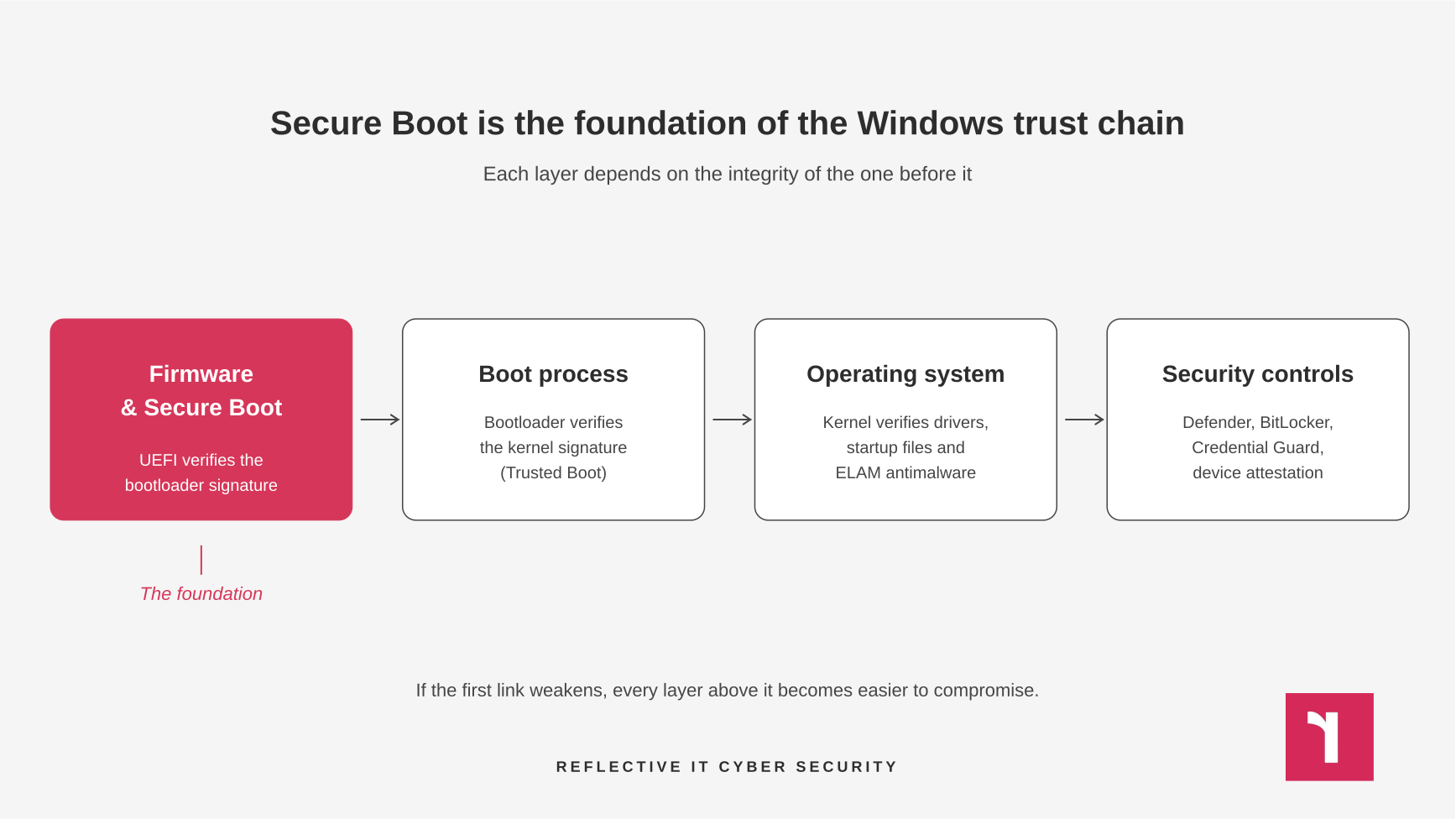
Secure Boot should not be treated as a one‑off configuration task. It underpins the entire trust chain of a Windows device. If the first link in that chain weakens, everything above it becomes easier to compromise. Secure Boot certificate changes should therefore be treated as part of an ongoing security lifecycle, not just a compatibility update.
What Should Businesses Do Now?
With June 2026 approaching, organisations should take action well in advance.
Key steps include:
- Reviewing Secure Boot status across Windows devices
- Identifying systems still using older certificates
- Understanding which devices may not support newer certificate requirements
- Planning remediation as part of hardware and device lifecycle management
- Ensuring ongoing monitoring is in place to detect configuration drift
Addressing this early reduces the risk of unmanaged exposure and last‑minute remediation under pressure.
How Reflective IT Can Help
As a managed IT and Security Operations Centre provider, Reflective IT focuses on both visible threats and the security foundations underneath them.
Our approaches include:
- Microsoft Defender monitoring and posture management
- Proactive identification of device and configuration risk
- Continuous oversight through our SOC
- Support with remediation planning and security‑led device strategy
Rather than relying on periodic checks, we help ensure protections like Secure Boot remain effective as environments evolve.
If you would like help reviewing your Secure Boot readiness or understanding what this means for your environment, speak to our team.
📞 0207 317 4535 | 📧 support@reflectiveit.com