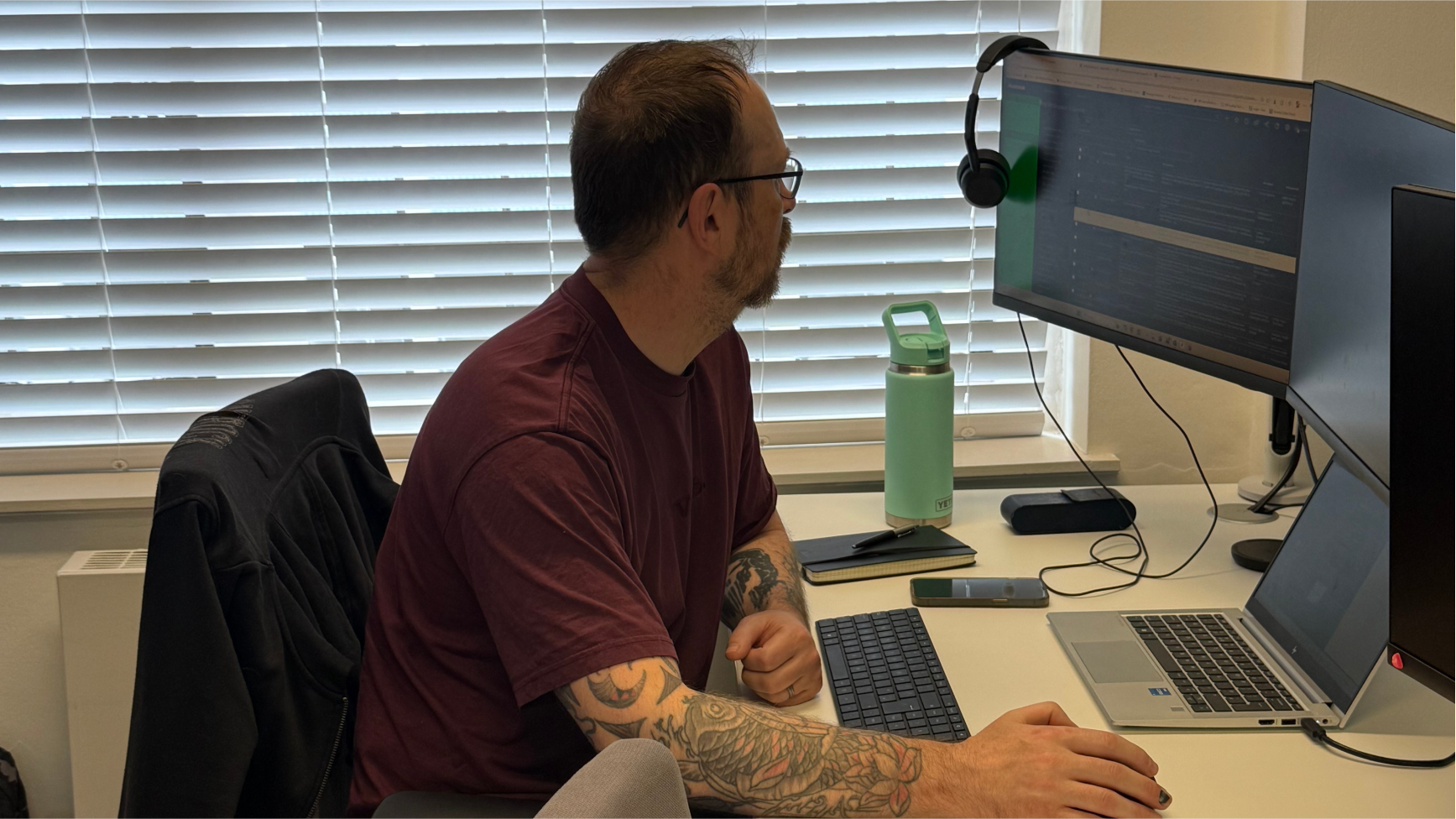
If you've ever called Reflective IT, there's a good chance you've already spoken to Colin. As one of our 2nd Line Service Desk Analysts, he's the calm, steady voice on the other end of the line that makes even the most stressful IT moments feel a little more manageable. The kind of person clients actually enjoy dealing with, which in IT support is rarer than you'd think.
Five years in, he's quietly become one of the most reliable people on the team. He came to IT from a completely different world, retrained from scratch, and hasn't looked back since. When he's not untangling problems that have been baffling clients for weeks, you'll find him playing cricket for his local club or somewhere up a climbing wall.
We sat him down for a catch-up about the job, the career change, and the Microsoft certification he's just added to his name.
How it all started
1. Nearly five years at Reflective. Does it feel like it?
Not really, which I'm told is usually a good sign.
2. You came to IT from the NHS. That's quite a switch. What happened?
I was working in community support and decided I wanted a change. So I retrained in IT and went from there. Best decision I made, honestly.
3. What does a typical day actually look like for a 2nd line analyst?
No two days are the same, which is part of why I enjoy it. I'll usually start by going through the ticket queue, picking up anything escalated overnight or flagged as urgent. From there it could be anything: troubleshooting a connectivity issue for one client, working through an access problem for another, jumping on a call to walk someone through something. You get very good at context-switching very quickly.
4. What's the kind of problem that makes you think "right, this is interesting"?
The ones with no obvious answer. When a ticket comes in and nothing's clear straight away, you have to dig, test a few theories, rule things out. Finding the root cause of something that's been quietly annoying a client for weeks and finally nailing it down is genuinely satisfying. That's the good stuff.
Life at Reflective IT
5. You joined because of the interview. Not the job spec, not the perks. The interview. Tell us more.
Honestly, it came down to how well I got on with the people doing the interview, both on the phone and in person. Sometimes you just click with a team and you think, yes, I want to work with these people. That was it for me.
6. What would surprise someone about working here?
How much variety there is. You're not dealing with one type of client or one type of environment, so your knowledge has to stay pretty broad. And people actually help each other out here rather than just protecting their own patch. That's rarer than it sounds.
7. What are you most proud of, looking back?
The problems I walked into not knowing the answer. The ones where I had to go away, research properly, and come back with a fix. Those are the ones that stick. Anyone can solve something familiar. Solving something you've never seen before feels different.
Cracking the Certification
8. The SC-300 Identity and Access Administrator Associate is a serious certification. What made you decide it was the right one to go for?
It comes up constantly in the work we do: who has access to what, making sure the right controls are in place, conditional access policies. I wanted to properly fill in the gaps rather than just picking things up as I went along. Less flashy, yes. Very useful, also yes.
9. What was the bit that made you stop and think carefully?
Conditional access policies. Not because they're complicated in isolation, but because of how they interact with each other, and how easy it is to lock someone out if you get the logic wrong. You learn very quickly to test in a way that doesn't blow up a client's environment. Lesson learned the careful way.
10. Did anything from the exam genuinely change how you think about security?
How much of a target identity has become compared to traditional perimeter security. You can have the best firewall in the world, but if someone's credentials are compromised, that's often all it takes. I knew it in theory, but the detail of how attackers actually exploit it made it click properly. Identity is the new perimeter. It sounds like a slogan until you really get it.
11. How quickly did it feed back into the day job?
Straight away. Reviewing conditional access setups with more confidence, spotting when something isn't configured as tightly as it could be. I'm also quicker now to flag when a client's environment has gaps they might not know about, and I can explain why it matters rather than just raising it and moving on.
Away from the desk
12. Cricket and climbing. Two hobbies that have absolutely nothing in common. How did you end up with both?
Cricket takes up most of the summer, which I'm not complaining about at all. I play for my local club and it's a proper way to switch off. Climbing does the same thing in a different way. When you're on a wall, you're not thinking about anything else. Between the two, the weekends are pretty full.
"Some things simply cannot be faked, and Colin's dedication to our customers is one of them. He genuinely cares about resolving every incident and making sure people walk away happy, and you can feel that in every interaction.
He handles everything with such care and finesse that it's honestly inspirational to watch. There's real joy in listening to him on the phone with a customer, he gets his teeth into a problem and does not let go until it's sorted.
It's been brilliant to see him grow and develop over time, and he's become a fantastic example to everyone around him.
The only thing we'd change? He gets just a little too smug when he bowls a strike. But we've decided we can live with that."
Mandy Iremiren