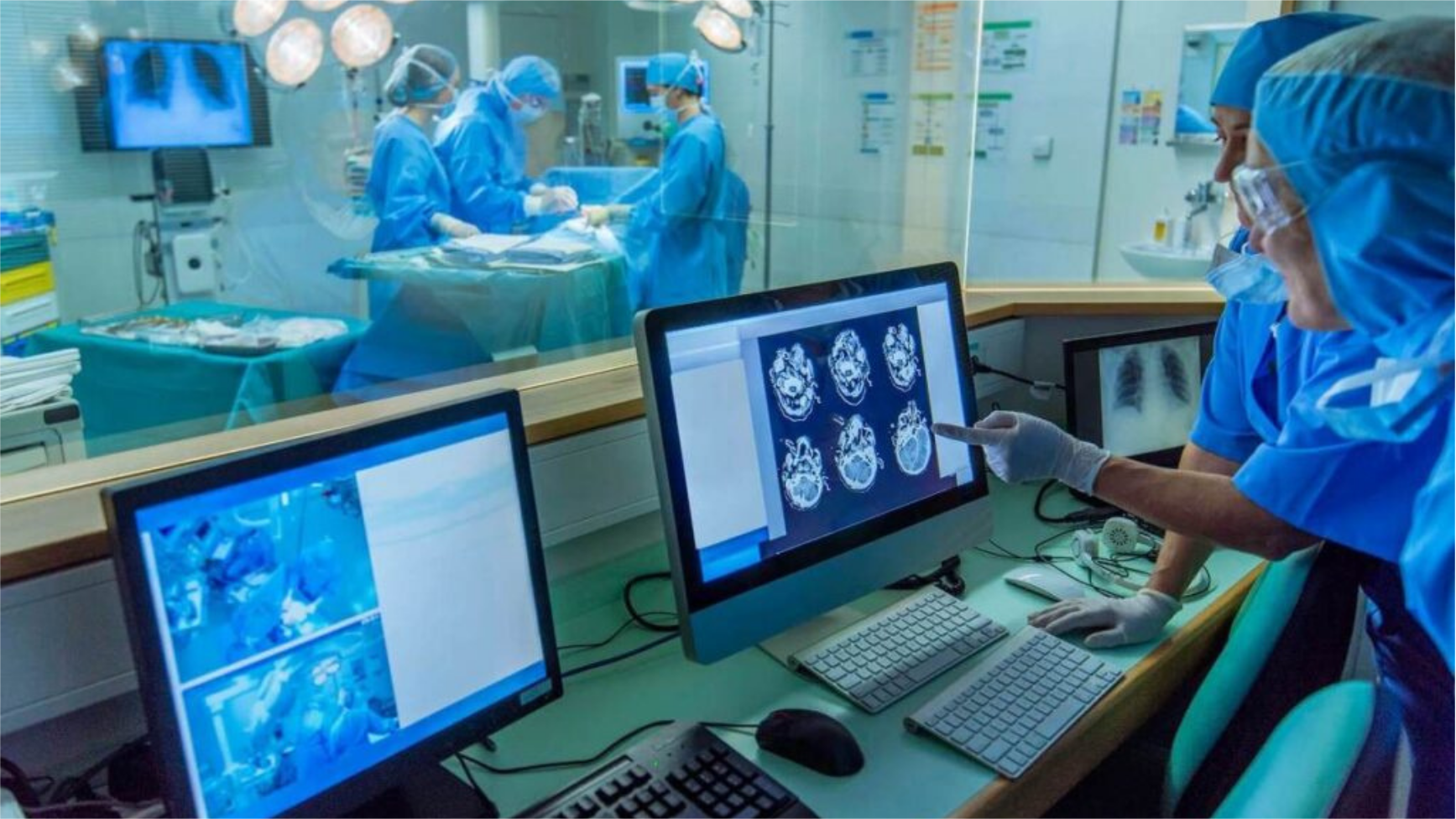
This week, thousands of NHS patient records were stolen not through the NHS itself, but through a third-party supplier, as reported by the BBC. The cyber attack did not need to breach the NHS directly. They found a weaker link in the chain, and that was enough.
Your business faces the same risk
This kind of attack is not unique to healthcare. If your business relies on any external provider, cloud platform, payroll tool, or outsourced service, your data travels beyond your walls. When a supplier is compromised, the businesses connected to them are exposed too, regardless of how strong their own internal security is.
Attackers are strategic. They do not always go for the biggest target. They go for the most accessible one. A smaller supplier with weaker defences, connected to a larger organisation with valuable data, is an attractive route in. Once inside that supplier's systems, the attacker can move laterally, exfiltrate data, and cause disruption that ripples far beyond the original point of entry.
The question is not whether your sector is a target. It is whether the weakest link in your supply chain is visible to you.
The consequences go beyond the breach itself
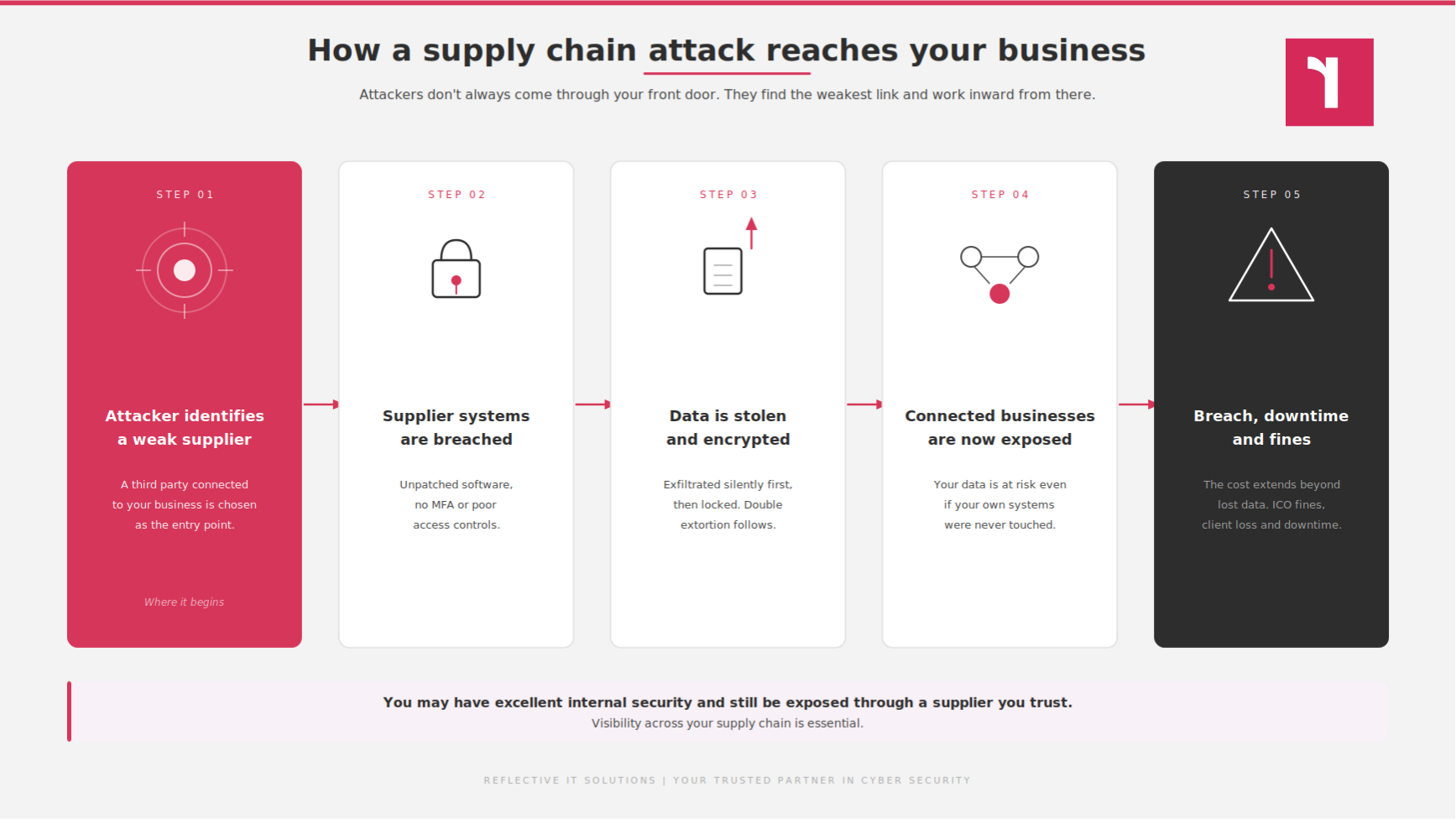 When sensitive data is stolen, the immediate damage is only part of the picture. Under GDPR, organisations that suffer a data breach are required to notify the ICO within 72 hours. Where inadequate security is found to be a contributing factor, the fines can be significant. One NHS software supplier was fined £6 million by the ICO following a ransomware attack that compromised the data of over 82,000 people.
Beyond the regulatory exposure, there is the reputational impact. Clients and partners increasingly want to know that the businesses they work with take security seriously. A breach, even one that originates with a supplier, raises uncomfortable questions about oversight and due diligence that can be difficult to answer after the fact.
What to check right now
These are the questions every business should be able to answer with confidence:
- Are your systems and software fully patched and up to date? Outdated software is one of the most common entry points for attackers, and one of the easiest to address.
- Do all accounts use multi-factor authentication? One compromised login is often all it takes. MFA significantly reduces that risk.
- Do you know what security standards your key suppliers hold? Their weaknesses become your exposure. Asking the question is the starting point.
- If ransomware hit tomorrow, how quickly could you recover? Having backups is not enough. Tested, immutable, rapidly restorable backups are what actually matter when the pressure is on.
- Is someone actively monitoring your environment for threats? Attackers rarely strike instantly. They often move quietly through a network for days or weeks before causing damage. Continuous monitoring catches that activity early.
If any of those give you pause, it is worth a conversation.
How Reflective IT Can Help
At Reflective IT, we help businesses understand and close these gaps before they become incidents. The patterns behind attacks like this one are not unusual, and they are not inevitable with the right defences in place.
Our Managed Security Services provide 24/7 monitoring across your environment, identifying threats before they escalate. Our Security Operations Centre means that when something does require immediate attention, the right people are already watching. And our Disaster Recovery and Backup Services ensure that if the worst does happen, your recovery is fast, tested, and complete.
Incidents like this are a reminder that cyber threats do not discriminate by sector or size. The best time to review your exposure is before an incident, not after, speak to our team.
📞 0207 317 4535 | 📧 support@reflectiveit.com